



Looking for a Shorter Overview?
AI Summary
Key Moments
Local AI Integration
RTX Spark allows advanced AI models to run directly on personal devices for privacy and speed.All-in-One PC Vision
The chip aims to combine gaming, AI workloads, and content creation on a single system.Partnership Importance
Collaboration with Microsoft and major PC brands is crucial for mainstream adoption.Software Compatibility Challenge
Adapting software and ensuring performance on new hardware architecture is a key barrier.RTX Spark: The Chip That Wants to Reinvent the PC
What if your computer stopped waiting for commands and started working alongside you?
For decades, personal computers have followed the same routine. You open an app, click a button, type a command, and wait for the machine to respond.
NVIDIA believes that familiar relationship is about to change.


With RTX Spark, the company is imagining a future where your PC is no longer just a tool. It becomes a personal AI partner capable of understanding tasks, handling workflows, and helping you create faster than ever before.
The future PC will not simply run software. It will work alongside you.
A New Kind of Computer

RTX Spark is not just another chip launch. It represents NVIDIA’s bigger vision for the era of Personal AI.
The idea is simple but powerful: instead of sending every AI task to the cloud, future computers could run advanced AI models directly on your desk or laptop.
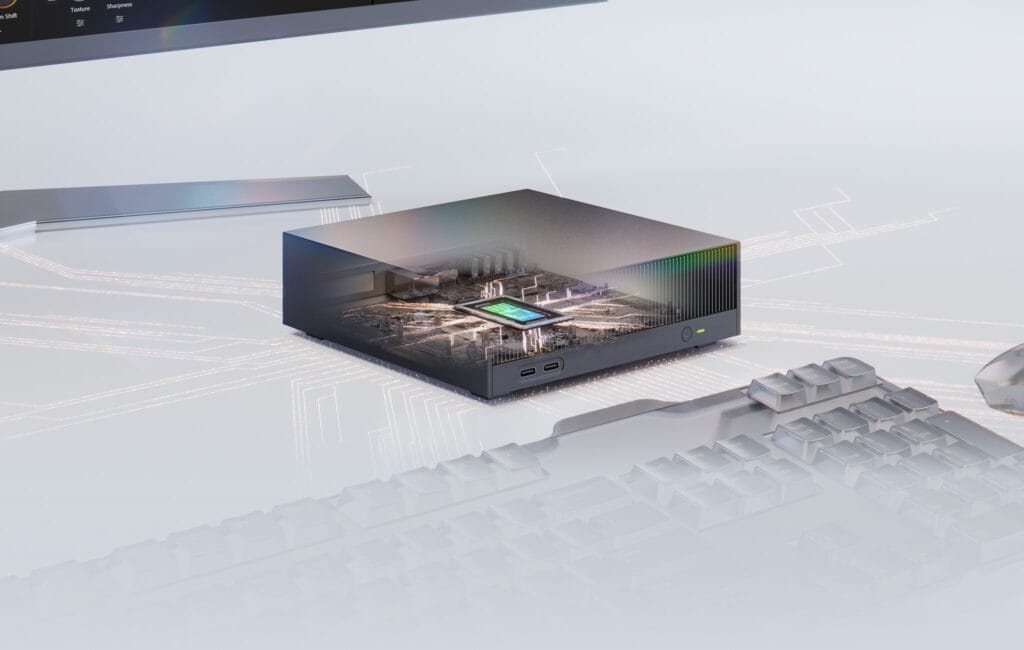
The chip combines Blackwell RTX graphics, a 20-core Grace CPU, up to 128GB of unified memory, and up to 1 petaflop of AI performance.
Those numbers sound impressive, but the real story is not just speed. It is about changing how people use computers.
Why Local AI Matters
Most AI tools today depend heavily on cloud servers. When you ask an AI assistant to write, summarize, generate, or analyze something, your request usually travels through the internet before the answer comes back.
RTX Spark challenges that model by bringing more AI power directly to the device.
- 🔒 Better privacy for sensitive data
- ⚡ Faster responses without cloud delays
- 🌐 Offline AI capabilities
- 💰 Lower dependence on cloud subscriptions
- 🧠 More control over personal workflows
For creators, developers, researchers, and businesses, this could be a major shift. Imagine editing videos, building apps, generating content, and running AI assistants without constantly depending on remote servers.
Instead of sending your data to AI, AI comes to your computer.
The Dream Scenario
If NVIDIA succeeds, RTX Spark-powered PCs could become true all-in-one machines.
- Run large AI models locally
- Edit ultra-high-resolution video
- Create AI-generated images, videos, and media
- Build software using AI agents
- Render complex 3D scenes
- Play demanding AAA games
Instead of needing separate machines for gaming, content creation, and AI workloads, users could get everything from a single powerful system.
Partnerships Could Decide Everything
NVIDIA is not building this future alone. Microsoft is expected to play a major role by shaping a Windows experience designed for AI agents and local AI workflows.
Major PC brands such as ASUS, Dell, HP, Lenovo, MSI, Acer, and GIGABYTE could also help bring RTX Spark-powered devices to mainstream users.
Software support will be equally important. Creative tools, development platforms, AI apps, and gaming engines will need to be optimized for this new kind of computing experience.
The Competition Is Already Fierce
RTX Spark enters a market where every major chipmaker is chasing the AI PC future.
- Apple has already proved the strength of ARM-based performance with its M-series chips.
- AMD is pushing powerful AI-focused architectures.
- Intel is investing heavily in AI PCs and next-generation processors.
- Qualcomm has helped bring ARM-powered Windows laptops into the spotlight.
NVIDIA may have strong AI experience, but winning the PC market will not be easy.
The Biggest Challenge
The biggest challenge for RTX Spark may not be hardware. It may be software compatibility.
Many Windows applications still depend on traditional x86 processors. Developers will need time to optimize apps, businesses will demand stability, and gamers will expect smooth performance from day one.
Without strong software support, even powerful hardware can struggle to become mainstream.
My Take
I do not expect RTX Spark to replace traditional PCs overnight. Intel, AMD, Apple, and Qualcomm systems will continue to dominate many parts of the market for years.
But RTX Spark matters because of the direction it points toward.
For years, computers were built around applications. You opened a program, completed a task, and moved to the next app. The AI-first PC changes that idea. Instead of opening apps, you describe what you want done, and the computer helps make it happen.
That is why RTX Spark feels important. It may not be perfect. It may not be for everyone at launch. But it could mark the beginning of a new category: the Personal AI Computer.
The next generation of PCs will not just respond to commands. They will collaborate with us.