


Looking for a Shorter Overview?
AI Summary
Key Moments
Undo Button Enables Conflict
Wikipedia’s reversible edits allow ongoing disagreements through repeated reversions.Three-Revert Rule Introduced
A policy limiting reverts reduces fight intensity but does not end disagreements.Core Policies to Defuse Wars
Neutrality, verifiability, and no original research help turn feelings into rule-based consensus.Transparency as a Strength
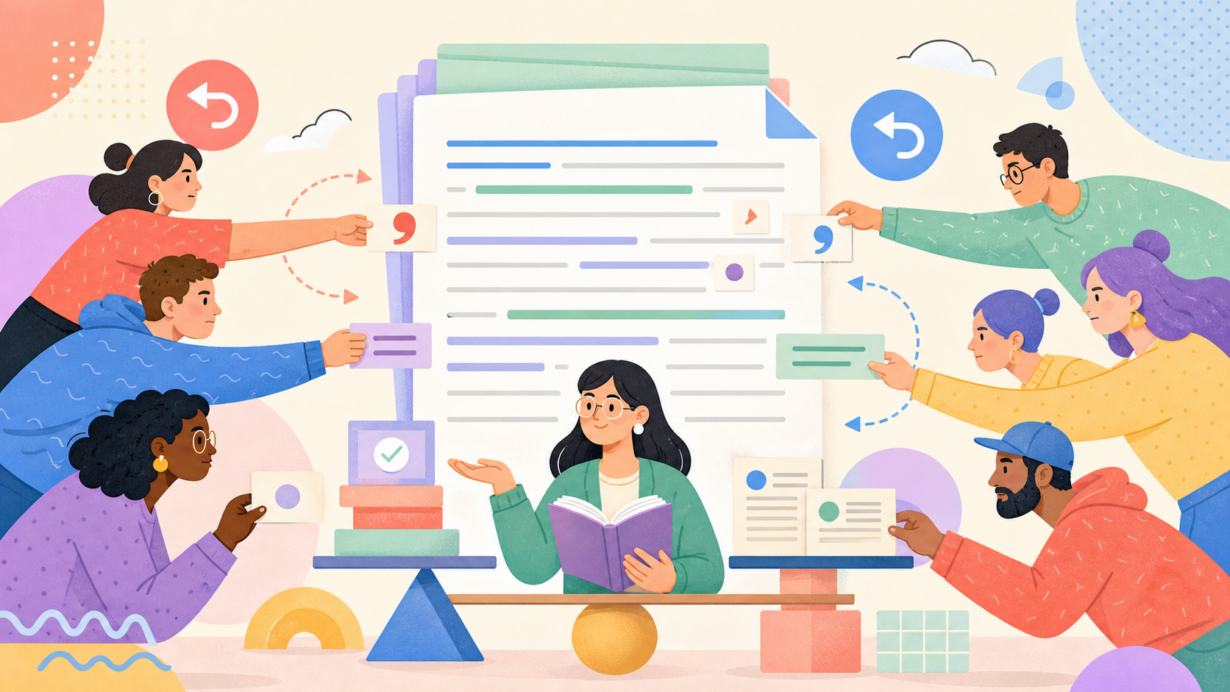
Visible edit histories show consensus is built through conflict, not accidental agreement.Somewhere on Wikipedia, right now, two people who will never meet are fighting over a comma. One changes it; the other changes it back. A minute later it flips again. To everyone reading the article, the page looks finished, authoritative, and calm. Underneath, it is a battlefield — and the battle is the point. Wikipedia edit wars are the hidden machinery of the most-read reference work in human history, and they reveal something uncomfortable about how any consensus, online or off, actually gets made.
An edit war, in Wikipedia’s own words, happens when editors who disagree about a page repeatedly override each other’s changes. It is not a debate. Debate happens on the “talk” page. An edit war is the version of the argument fought with the “undo” button, and it can go on for a very long time.
The origin: a button called “undo”
Wikipedia’s founding bet was radical: let anyone edit anything, and trust that truth would win by accretion. The genius of the design was reversibility. Every version of every page is saved forever, and any change can be undone in one click. That single feature made vandalism survivable — but it also handed every disagreement a weapon. If you can always revert, you can always keep fighting.


For the first few years, nothing stopped the fighting from spiralling. So in 2004 the community introduced the three-revert rule, or 3RR: no editor may undo the same material more than three times on one page within 24 hours. Break it, and you can be blocked. It was a traffic law for a lawless intersection, and by some accounts it cut reverting roughly in half. Notably, it did not resolve a single argument. It just forced the combatants to slow down and, eventually, to talk.
How the wars spread
The flashpoints are predictable once you know them. Persistent Wikipedia edit wars cluster around exactly the subjects that divide people offline: abortion, the Israeli–Palestinian conflict, national and ethnic identity, religion, and the pronunciation or ownership of contested history. Some are almost comically specific. The nationality of the painter Francis Bacon — Irish or British? — has been fought over for years.
The scale can be staggering. According to a 2020 study, the longest single revert sequence on record ran to 105 reverts by 20 users, in a 2008 tug-of-war over the biography of Mustafa Kemal Atatürk, the founder of modern Turkey. Twenty strangers, more than a hundred reversals, over how to describe a man dead since 1938. Researchers who mapped this behaviour, led by Taha Yasseri, found that contested articles fall into three tidy categories: pages that reach genuine consensus, pages that settle into a “sequence of temporary consensuses,” and pages locked in “never-ending wars.”
Why people fight this hard
Here is the part that surprises newcomers: almost nobody edit-warring is being paid, and almost nobody will ever be thanked. So why do it? Partly it is identity — people defend the way their country, faith, hero, or hobby is described because the description feels personal. Partly it is a sense of duty; many editors genuinely believe they are protecting accuracy from error or bias. And partly it is the oldest online motivation of all: the other person is wrong on the internet, and you have an undo button.
What makes Wikipedia unusual is that this stubbornness is not purely destructive. The same tenacity that fuels a pointless comma war also powers the patient, unglamorous labour of keeping millions of articles current and sourced. The platform runs on people who cannot let things go.
The design that turns fights into facts
Wikipedia’s real invention was not the encyclopedia. It was a set of rules for converting conflict into something usable. Three principles do most of the work: “neutral point of view,” “verifiability,” and “no original research.” Studies of edit warring found that experienced editors defuse fights not by shouting louder but by citing these policies — turning “I’m right” into “the source says, and the policy requires.” An argument that cannot be won on feelings can sometimes be ended on rules.
This is why the manufactured nature of Wikipedia’s consensus is a feature, not a scandal. The calm grey article you eventually read is not the absence of disagreement. It is disagreement that has been forced, through revert limits and sourcing rules and exhausting talk-page threads, into a shape everyone can just barely live with. Like the strange folklore of internet copypasta, it is a product of communities negotiating their own norms in public.
The cultural afterlife
The lesson of Wikipedia edit wars reaches well past Wikipedia. Every platform that lets crowds shape shared truth — from social media to open-source code to community fact-checks — has rediscovered the same problem: openness invites conflict, and conflict needs plumbing. Wikipedia’s plumbing is visible, logged, and auditable. You can literally read the fight. On most platforms, the equivalent battles happen invisibly, decided by algorithms and moderators you never see.
That transparency is the quiet gift buried in all the squabbling. Wikipedia does not pretend consensus is natural or effortless. It shows you, revert by revert, that agreement is built — argued into existence by people who care too much, constrained by rules just strong enough to hold. The next time an article looks obvious and settled, remember that somebody, probably, had to fight for that comma. And that is not the system failing. That is the system working. Wikipedia’s own edit-warring policy reads, fittingly, like a peace treaty written mid-battle.